
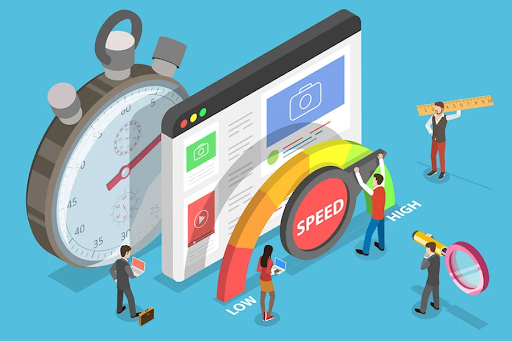
Page speed has evolved in the cutthroat digital environment from a basic technical indicator to a major predictor of online success. Directly harming user experience, a slow website results in greater bounce rates, lower engagement, and missed conversion chances. Moreover, Google has confirmed that site page speed is a ranking criterion, so slow pages suffer a penalty in search engine results pages (SERPs), making them more difficult for prospective clients to find. Addressing performance problems is not a luxury but rather a need for any company wanting to flourish online. For companies in a busy digital hub, where working with a qualified SEO company London UK can offer the specialised knowledge needed to diagnose and fix speed-related issues effectively, assuring your site satisfies contemporary performance expectations, this is especially vital.
Compress and Optimise Pictures
Unoptimized images are some of the commonest reasons why websites load slowly. The page weight could be very high when one uploads high-resolution photos directly through a camera without compressions. Fight this by resizing photographs to the exact specifications required by the design of your site before uploading instead of uploading full-sized photos. Next-generation formats, such as WebP or AVIF, have also been shown to be better in compression and quality than more traditional JPEGs or PNGs. Compression tools, some of them available online, reduce file sizes with loss of quality being barely noticeable. Careful optimisation of all visual assets can greatly lower the quantity of data a user’s browser needs to download, hence considerably page speed rendering times and improving the overall experience for your visitors.
Use of Browser Caching
After a first visit, browser caching is a strong strategy that stores static website materials, such as photographs, CSS, and JavaScript, locally on a visitor’s PC. Their browser can load these components from its local cache rather than get them all again from your server when they revisit your site. This greatly lowers the volume of HTTP requests needed to show the page, therefore providing nearly quick loading times for returning visitors. Setting expiration dates for several kinds of files, you can configure caching either by changing the .htaccess file of your website or via your hosting control panel. One basic first step in improving performance and fostering user retention is the use of an efficient caching approach.
CSS, JavaScript and HTML should be shrunk.
Often contains unnecessary characters like spaces, comments, and line breaks, which are helpful for developers but repetitive for browsers, the code that builds your web pages. Minification is the removal of such components to lower file sizes. Downloads and runs of shorter CSS, JavaScript and HTML files are quicker, therefore increasing website speed. Using several plugins or build tools, this can be done automatically. Think about merging files to cut down on HTTP requests for CSS and JS. Save unminified originals of your code for editing; use the minified versions on your live site. This basic but strong optimisation could take off priceless milliseconds from page speed.
Use a Content Delivery Network (CDN)
A globally dispersed network of servers storing cached versions of your site’s static content is known as a content delivery network (CDN). Instead of from your single, centralised origin server, the CDN delivers these assets from a server physically closest to the user. This speeds load times for a worldwide audience by greatly decreasing the physical distance data has to go and so reducing latency. Additionally, it relieves your main hosting server of its load, thereby shielding it from traffic surges and probable crashes. Investing in a reliable CDN is a very smart move for any organisation trying to give consumers a consistent, quick experience irrespective of their geographic location.
Get rid of resources blocking render.
Typically CSS and JavaScript files that a browser has to obtain, interpret, and run before it may show the user the page content are render-blocking resources. This causes a perception of slowness by delaying the first presentation. To solve this, carefully evaluate which CSS is critical for the initial page view (above-the-fold material) and inline it straight in the HTML. Asynchronously loaded can be non-critical CSS. To stop these files from impeding the rendering process in JavaScript, use the async or defer attributes.
Database and plugin cleanup
Post corrections, spam comments, and transient options can clog the database of a website over time with unneeded data. This bloat can slow down database inquiries, therefore raising page creation times. Regular database optimisation using specialised plugins or your hosting panel may help to bring performance back. Simultaneously, too many badly written or useless plugins can load your website page speed with redundant scripts. Make sure the individuals you maintain are updated to their newest versions since updates sometimes contain security fixes and performance enhancements.
In conclusion
Improving page speed is a never-ending cycle of optimisation and monitoring, not one act. From image compression and browser caching to code minification and database cleanup, the tactics discussed offer a strong foundation for producing great performance improvements. Every millisecond reduced load time helps to create a better user experience, which helps to produce greater search engine rankings, enhanced conversion rates, and more engagement. A fast and reactive website is now a basic need for obtaining and keeping internet visibility and success in the current rapid digital environment rather than optional.
