
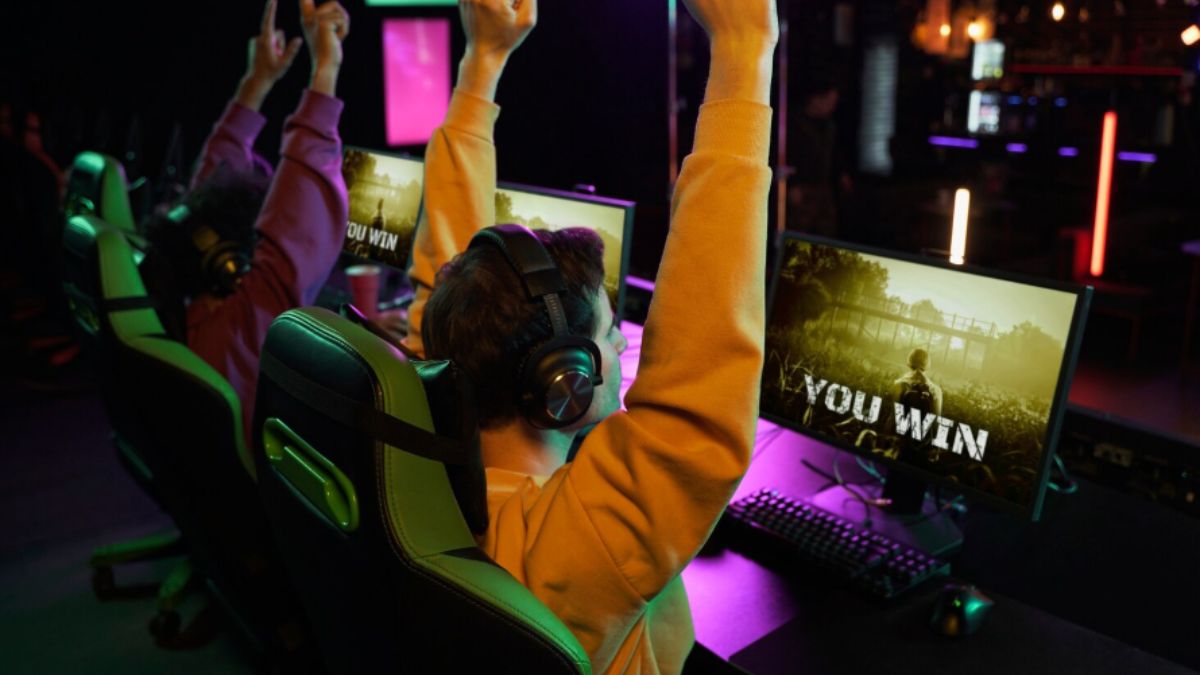
I will always remember the moment when I came across the words gamer challenger. It did not appear in a marketing post or refined esports news, but in authentic discussions of players who were weary of being mediocre and starving to rise up. A gamer challenger is not merely a person who plays games to me. It is a person who does not stand still within his or her limits, doubts his or her ability and competence, and considers each game a challenge to improve. Such an attitude is the only difference that will modify the way you take games, be it casually or seeking something more substantial.
It eventually dawned on me that being a challenger was not about a zesty victory but rather at steady, discipline, and attitude. You begin to notice minor details such as decision making, reaction time, positioning and even the way you cope with loss. Losses cease to experience failure and begin to experience feedback. It is at that change that actual improvement occurs and a majority of gamers never make it.
I would like to deconstruct what it really means to get into that challenger mentality in this guide. I will express useful tips, candid views and game principles, which really stick in modern time. No hype, no empty motivation. Nothing but a pure experience-based observation of the way in which a game challenger thinks, plays, and develops in an ever-changing game world is enough.
What is the Real Meaning of Gamer Challengers in New Gaming.
To be called a gamer challenger does not mean fame, big wins, or stream figures. It is a mentality that keeps an amateur player apart as one who intends to improve. In its essence it is a gamer who will accept responsibility to all the actions in the game and will keep on examining his/her mistakes and strive to be a master. As opposed to amateur gamers who play to have fun, players on challenger levels are oriented to the quantifiable progress and development of skills. It does not imply that it is no longer enjoyable, on the contrary, they enjoy playing games even more since every win is seen as a win earned, and every failure is an excellent opportunity to learn a new thing.
Gamer challengers love competition, though not to be validated, they challenge so that they can test their own boundaries and push them. They are interested in strategy, mechanics and psychology. They follow trends, observe the gameplay of the best players and incorporate that into their own playstyle. Simply put, it is a way of becoming a self-aware, disciplined and strategic gamer challenger. It is not an ego award but an ongoing process of becoming a better person.
The Psychological Approach that Makes the Difference between mediocre players and players with talents.
Challenger attitude is all about thinking differently. Where an average gamer may feel frustrated by the loss or possibly by the factor of luck, a challenger in the game will survey every aspect of the game: the positioning, timing, making decisions, or even the emotional reaction to the game. They are aware that it is the mind that is the most important thing rather than the technical ability. As an example, when a player loses a few rounds consecutively, rather than surrendering, a challenger takes time to assess what has gone wrong, reevaluate his/her strategies and consider it as free coaching.
The interesting thing is that this attitude is spilled into real life. Challenger thinkers can also make better problem-solvers and decision-makers in real life as well as in the game. They are always assessing results, testing strategies and accepting positive feedback. It is this curiousity, discipline and perseverance that makes the difference between professional gamers and those who are trapped in a circular game of amateur play. The attitude is not natural, but it is developed by practicing, thinking, and playing purposefully.
Skills Every Gamer Challenger Trains Every Day.
When you believe that being a gamer challenger is simply about being able to use your fingers fast, you are mistaken. Although there is the issue of reaction time and precision, it is the skills that make challengers stand out and are not actually taken into consideration. It is equally important to think strategically, be flexible, communicate and be situationally aware. They study trends, anticipate the moves of the opponents and make decisions in a fraction of a second that can turn out to be the difference between winning the game and a loss.
In addition to the gameplay, a lot of challengers are concerned with physical and mental stamina. The duration of the long sessions is demanding as it demands concentration, and management of stress. Others even go to the extent of using devices such as aim trainers, replay analysis and team drills to hone down certain skills. In the end, the person to be a challenger is not the ability to do things but rather the willingness to improve steadily and the knowledge of the steps that each action would lead to performance. This is the reason why even amateur players can bring their game to a higher level by engaging into these habits.
The practice and improvement models of Gamer Challengers.
It is not simply a case of playing the game; practice is a well-organized, purposeful process in the case of a gamer challenger. They establish targets in each session, and they are oriented to such aspects as mechanics, map control or decision-making. To illustrate, they could take 30 minutes to analyze replays when they could effortlessly grind a match, or could foresee patterns. They integrate repetition and reflection, with a quantifiable result of every session.
The other significant strategy is to test new strategies. Players in the challenger level have no fear of failing as they view it as data. When one tactic fails, they change, polish and restart afresh. There is the use of community resources, coaching and online forums selectively to keep an eye on meta shifts or gameplay innovations. It is this kind of thoughtful, deliberate practice regimen that leads to the growth of skills much more quickly as compared to unplanned play.
The Competitive Games and their role in making a Gamer Challenger.
Sporting events are not only fun to a computer player who gets to challenge, but also trade training fields. Tournaments, ranked modes, and esports ladders motivate players to learn and adjust fast, address stress, and play under pressure. Every game is a lesson in decision-making, tactics and endurance. Competitive settings unlike casual play generate stakes that give meaning to reflection.
It is also through being involved in competitive gaming that there is a sense of accountability. Players do not compare themselves to friends or previous achievements but other players who aim at the same objective. This motivates concentration, discipline and drive. Although a competitive environment may never make a player a professional, the experience of competitive gaming, in terms of strategy, action, and self-awareness, is applied to greater skill levels in non-competitive play. It is a participatory feedback which constitutes character as much as talent.
Mistakes That Prevent Gamers from becoming Challengers.
Most gamers want to become challengers but they become trapped by the pitfalls. The first one is too much emphasis on winning, but not learning. Improvement on a challenger level may also be derived through realization of errors rather than wins. The second pitfall is the failure to consider mental resilience. Months of work can be reversed by frustration, tilt, or burnout.
Other players practice blindly, practicing the same things over and over without contemplation. Other ones do not appreciate the value of basics like positioning, map awareness or communication. Lastly, a deficiency in interest toward new strategies or meta shifts might stagnate growth. Being aware of these errors will help players to rectify themselves early and embrace practices that are in line with the gamer challenger mentality of constant improvement, flexibility and self-awareness.
Platforms, Resources, and Tools that Gamer Challengers Use.
Gamer challengers do not just have skill, but they have resources. The various tools such as aim trainers, strategy analyzers, and replay software enable the player to identify areas of weaknesses. Discord or community forums give an insight on what others in the same rank have to say creating a feedback loop of tips, strategies and meta analysis.
YouTube tutorials, esports broadcasts and streaming services are also invaluable. Watching the actions of the highest levels of players can assist challengers learn more about the details that are not evident when they have to play on a lower level. Hardware options such as high-response displays can improve performance, or even the choice of controller, which in turn can be used to improve performance. These resources together increase natural skill and enable the players to move more quickly. The trick is deliberate application, however, tools are useful only when applied with the strategy, not as a shortcut.
The Effect of Mental Strength and Focus on the Performance of a Gamer Challenger.
Gaming is mental: it is as physical as their mind. Players at the Challenger level are able to build up focus, patience, as well as emotional control. They are able to hold themselves together when under pressure, make calculated choices, and not be impulsive when it comes to giving up games. The marathon sessions require mental stamina as fatigue may cause errors.
There are frequent methods of maintaining performance, which are visualization, mindfulness, and short breaks. Mental toughness also involves the ability to cope with losses in a positive way. Challengers examine failure, learn and do not quit the team or blame others, unlike rage-quitting. Such mastery and mental state guarantee steady progress, and mental strength is one of the primary attributes of a gamer challenger.
Gamer Challenger vs Casual Gamer Major Differences in the Ways of Thinking and Play
The amateur gamer would be playing due to leisure, entertainment or a social interaction. A gamer challenger, on the contrary, plays purposefully. They do not rush to make any decision, examine the behavior of their opponents, and constantly improve strategies. Where a casual player may continue with established strategies, challengers explore new strategies, adjusting to changes in metas or team relationships.
Another distinguishing factor is communication. Challenger players inspire, organize, and lead teammates and they know that the synergy is relevant as much as the personal ability. They also give emphasis on ego instead of ego. Victories are sweet and defeats are educational. In essence, the challengers are players whose mindset is geared towards growth and not only entertainment as they treat every match as a learning process.
Should it Be Worth Becoming a Gamer Challenger in the Current Gaming Industry?
It is not a matter of status and recognition, but mastery and development to become a gamer challenger. When players have such an attitude, they develop skills quicker, gain knowledge of games, and become more resilient. This attitude encourages critical thinking, problem solving and attention even when in non-competitive gaming.
Naturally, it entails commitment, systematic training, and readiness to make mistakes. The rewards are fantastic though, to a game enthusiast. Every win is more valuable, every defeat is more educational, and all the gaming process becomes more enriching. Challenger mindset is not only useful in a saturated gaming environment but it turns out to be a game changer.
The Future of The Gamer Challenger Identity in Esports and Online Gaming.
The gamer challenger identity is gaining popularity and respect as esports and online gaming keep growing. Players can no longer be mere competitors only; they are analysts, strategists and content creators causing a trend in the community. This change stresses not only the technical aptitude but also mentality, flexibility, and ongoing education.
We will probably have official programs, mentorship schemes and analytical tools that are challenger-specific. Rewards will be given to players that convey steady improvement, tactical thought process, in addition to active involvement of the world. Simply put, the challenger identity is not only changing into an individual ambition but also an established standard of excellence and influences both casual and competitive gaming communities.
Frequently Asked Questions
Q1: Does gamer challenger focus on professional players only?
No. Although the mindset of professional players could be similar to that of challengers, it can be learned by anyone. It is more about style than position. Amateur players may turn into challengers with the help of talent, contemplation, and development.
Q2: How many years to be a gamer challenger?
It varies. Months may bring some players forward, and some may require years. Speed is not as important as consistency, reflection, and intentional learning.
Q3: Do casual gamers have a mentality of challengers?
Absolutely. The attitude pays attention to self awareness and improvement. Even non-professional players can adopt such habits as replay analysis, goal-setting, and experimentation with strategies.
Q4: Which games contribute to growth in challenger level the most?
Ranked mode competitive or strategy based games are best. MOBAs, FPS, battle royale, and RTS games offer quantifiable feedback and room to develop skills.
Q5: Is high-end equipment required by gamer challengers?
Not necessarily. Although good hardware may make a difference in performance, attitude, practice and strategy are much more important than equipment. Competencies are cross-functional.
