
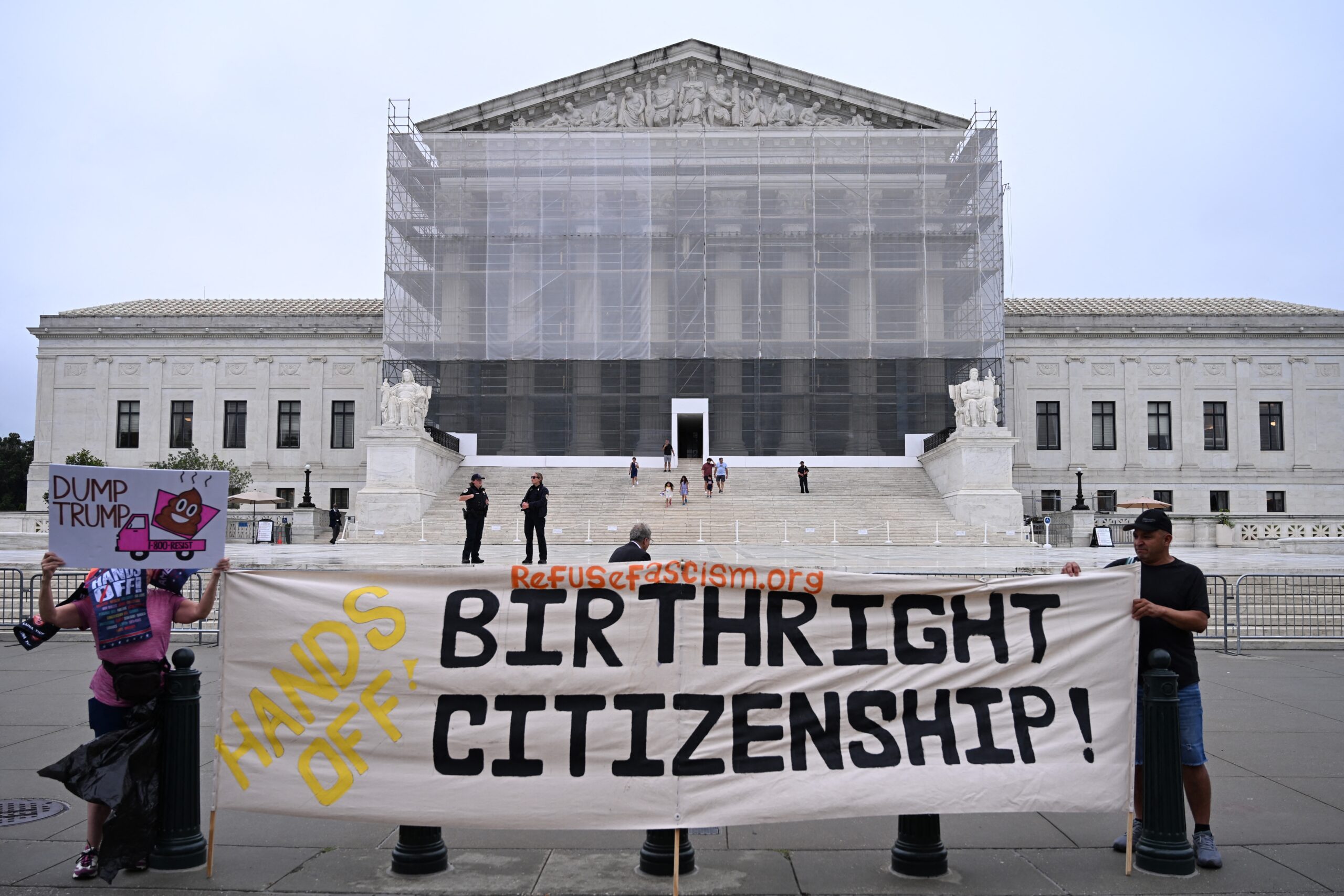
I have spent much time in a deep investigation on the debate of the Supreme Court’s birthright citizenship, and one thing has immediately come to light: this is not a mere legal matter hidden in the constitutional terminology. It is a very human subject that evokes the themes of identity, immigration, history, and the actual sense of belonging to the United States. All the headlines, court arguments and even the political statements provide another layer to it. Still, very few of them ever present the complete picture in a form that makes sense to the average reader.
The most interesting aspect of this is that one single constitutional provision has proven to cause decades of debate, case interpretation, and jurisprudence. The issue of birthright citizenship did not happen in a day. It developed with the most significant court rulings, alterations of immigration trends, and transformations in political conditions. It makes sense to understand the origins of these debates, which can be used to understand why the problem continues to reappear and why the emotions between both parties are so intense.
There are no laws or politics in this article. I want to take you through the subject matter step by step and in plain, simple terms. I want to disaggregate the history, tell what has been decided by the courts, and understand the reason why this question is essential now. When you have ever found yourself being confused about how the law operates and why you are questioning the law or what might happen, this guide is meant to provide you with a fundamental understanding rather than confusion.
What Is Birthright Citizenship and Why It Exists
Birthright citizenship is a legal doctrine according to which people who are born on the territory of a country are given citizenship, disregarding the nationality of their parents and their immigration status. This concept in the United States was meant to create a situation where the social classes could not be inherited by birth and could not be considered from a legal perspective. It used to have a strong historical role.
It guarded against the denial of citizenship to the formerly enslaved people as well as their offspring, depending on their race or origin. Gradually, birthright citizenship was integrated into the legal system of the country, and it influenced the sense of belonging and rights among Americans.
On the one hand, the rule itself can be said to be simple, but on the other hand, its connotations are not plain, as the rule implies. The current discussions revolve around the immigration trends, the enforcement of the borders, and the suitability of the initial purpose to the current circumstances. Such tensions maintain the birthright citizenship in the legal and political limelight at all times, particularly in cases of interpretations offered by the Supreme Court.
Constitutional Foundation of Birthright Citizenship in the United States
The constitutional basis of birthright citizenship is the Fourteenth Amendment, which was adopted following the Civil War, in an attempt to reconsider the meaning of freedom and equality. It has in its Citizenship Clause that all persons born in the United States and within its jurisdiction are citizens.
One sentence has been a massive legal burden over the generations. It has always been interpreted by the courts to mean a wide guarantee so that citizenship can never be discriminated against or withheld. It was this clarity that contributed to the stabilization of civil rights even in the turbulent periods in American history.
Nevertheless, the inquiries concerning the meaning of being subject to the jurisdiction remain controversial. It has been argued to do away with some groups of people, but some consider it to be almost universal.
It is the interpretation of this language that happens within the boundaries of the Constitution and not political pressure by the Supreme Court. Such a difference is essential in current legal debates.
The Fourteenth Amendment and Its Original Intent
To grasp the original meaning of the Fourteenth Amendment, one has to enter into a post-Civil War America. Lawmakers were keen on ensuring that states did not deprive citizenship of newly freed Black Americans. The amendment was not an abstract doctrine but rather a reply to unfairness. Most scholars of the law are in consensus with Roby that the Citizenship Clause was to be broad rather than limited. It was supposed to remove any uncertainty about who could be considered an American citizen.
In the course of time, the judges based their interpretation of this intent on historical records, the debates of the Congress, and legal history. Although the patterns of immigration now are not similar to those of the 1860s, the main idea of the amendment was obvious:
Citizenship is not supposed to be based on race, ancestry, or political convenience. That is the ultimate objective that remains to inform the Supreme Court analysis when the issue of birthright citizenship is brought to the fore.
How the Supreme Court Interprets Birthright Citizenship
The Supreme Court deals with the concept of birthright citizenship by interpreting the Constitution and not the populace. Justices look into precedent, history and the exact text of the Constitution. The Court has, over the decades, tended to give broad interpretations that support the protections of the Fourteenth Amendment.
The Court is not interested in rewriting the principles of the Constitution, but instead, it reinforces the legal standards. Such judicial uniformity is reassuring, despite a change in the political environment. Some critics have claimed that the Court today is evading reform, whereas the supporters have stated that the Court is safeguarding constitutional integrity. The reality is more nuanced.
The Supreme Court is not a very active institution, unless there is a direct legal challenge that requires clarification. When it happens, it not only spreads a wave of decisions that have an impact on the immigration law but also on the civil rights, federal authorities, and state powers. That is why Supreme Court birthright citizenship decisions are of particular importance in American jurisprudence.
Landmark Supreme Court Cases That Shaped Birthright Citizenship
There have been a few Supreme Court cases that determined the workings of birthright citizenship. The most powerful is the case of United States v. Wong Kim Ark, which restated that the child born in the U.S. to the parents who were not citizens was also a citizen under the Fourteenth Amendment.
This decision has provided a precedent that is still used by courts. Other cases strengthened the jurisdictional interpretations and made the exceptions of diplomats and foreign officials clear. When combined, these rulings formed a legal system where the place of birth takes precedence over parental status. These cases have been time-tested, making them strong.
The judiciary has not changed the same constitutional logic much in spite of changes in the political scene. The rulings still influence how the lawmakers, the courts and the citizens comprehend the rights of citizenship in contemporary America.
Can the Supreme Court End Birthright Citizenship?
The power to abolish birthright citizenship altogether is one of the most frequently posed questions concerning this issue, and it is all the more peculiar that the Supreme Court can actually have such power. According to the law, the Court cannot amend the Constitution. It can only interpret it. It is not possible to end birthright citizenship through a court decision, but through a constitutional one.
Although there are legal theories of restriction in the interpretation of the Fourteenth Amendment, it would be remarkable to overturn old precedents. The Supreme Court usually does not have radical reversals unless there is a massive legal basis to it.
This renders the prompt abolition of birthright citizenship by the judiciary very improbable. Rhetoric in politics can indicate the opposite of this, but the constitutional law is based on precedent and legal consistency, rather than campaign pledges and social pressure.
Arguments Supporting Birthright Citizenship
Advocates of birthright citizenship claim that it fosters equality, social cohesion and legal clarity. This system ensures that there are no stateless people since citizenship by birth ensures that the people have protection under the law. Another reason that advocates use is that of historical intent by stating that the Fourteenth Amendment was aimed at avoiding discrimination and exclusion.
Practically, birthright citizenship eases the way of legal procedures and lacks the uncertainty of bureaucracy. It is suggested by many legal scholars that by diluting it, we may end up having generations of individuals who will be in legal limbo.
The proponents also observe that birthright citizenship makes nations come together as all persons begin at the same level before the law. Such arguments strike a chord in Supreme Court debates, in which constitutional consistency has some serious weight.
Arguments Against Birthright Citizenship
The opponents of birthright citizenship tend to justify their issues based on immigration policies and national sovereignty. There is an argument that the policy promotes illegal immigration or is used to carry out so-called birth tourism. Others feel that the original meaning of the Fourteenth Amendment was incapable of considering the contemporary patterns of migration around the globe.
These arguments are concerned with the language of jurisdiction and the possible legal loopholes. Nevertheless, such arguments, in general, have been considered by courts to be inadequate to override constitutional precedent.
Although these issues are often chanted by the political leadership, there has been a split in the legal circles with regard to whether these issues can warrant reinterpretation. The Supreme Court is cautious primarily about such arguments and the distinction between policy preferences and constitutional requirements. Such a difference is the reason why few challenges ever win in Court.
A Real-World Story Behind the Legal Debate
The legal theories and court opinions are behind the real families whose lives depend on the citizenship rules. Take the case of a child born in the U.S. to an immigrant family that establishes a career and pays taxes, and gives back to the community. The citizenship of such a child is not an abstract concept, but it defines their right to education, jobs, and the law.
Such narratives make Supreme Court debates about birthright citizenship human by reminding both the Court and the citizen that the interpretation of the law impacts the lives of the people involved.
Judges can never make a decision based on emotions, but these realities in perspective give a context concerning the relevance of the protections of the Constitution. Law, however, is there to serve and not the other way round.
The Future of Supreme Court Birthright Citizenship
Birthright citizenship is bound to continue being a political and legal hotspot in the future. The transformation of the immigration patterns, the society’s opinion, and legislative priorities guarantees the persistence of the controversy. The Supreme Court precedent provides certainty, however, when the future is uncertain.
The change of constitutional language would likely change the way courts preserve the old interpretations. Detailed information can be improved in future instances, although a complete overturn seems unlikely. The most important thing is to find out the distinction between the legal reality and political rhetoric.
The decision of the Supreme Court on citizenship by birthright is based on the laws and not the headlines. That grounding gives stability to a fast-changing world so that citizenship will not be a right of ideology, but of law.
Frequently Asked Questions
Is birthright citizenship explicitly stated in the Constitution?
Yes. The Fourteenth Amendment expressly creates citizenship for individuals who were born in the United States and were within its jurisdiction.
Can a president end birthright citizenship by executive order?
No. Executive orders are not allowed to supersede constitutional clauses or case law.
Has the Supreme Court ever ruled against birthright citizenship?
There has not been a single significant decision to reverse the premise made in the Fourteenth Amendment.
Does birthright citizenship apply to everyone born in the U.S.?
Almost all, with the exception of children of foreign diplomats.
Will birthright citizenship change in the future?
This would need a constitutional amendment, and not a court ruling, to achieve any significant change.
